Research Highlights
IoTSensing Project Results. Publications for 2026 year:
- Valentin Popa, Adrian I. Petrariu, Alexandru A. Maftei, Mutescu Partemie-Marian, Alexandru Lavric, Razvan Mihai and Cristian Patachia – Sultanoiu. “Over-the-Air Performance Evaluation of an Open-Source Private 5G SA Network for B5G Experimentation.” Sensors 2026, 26, 5355.
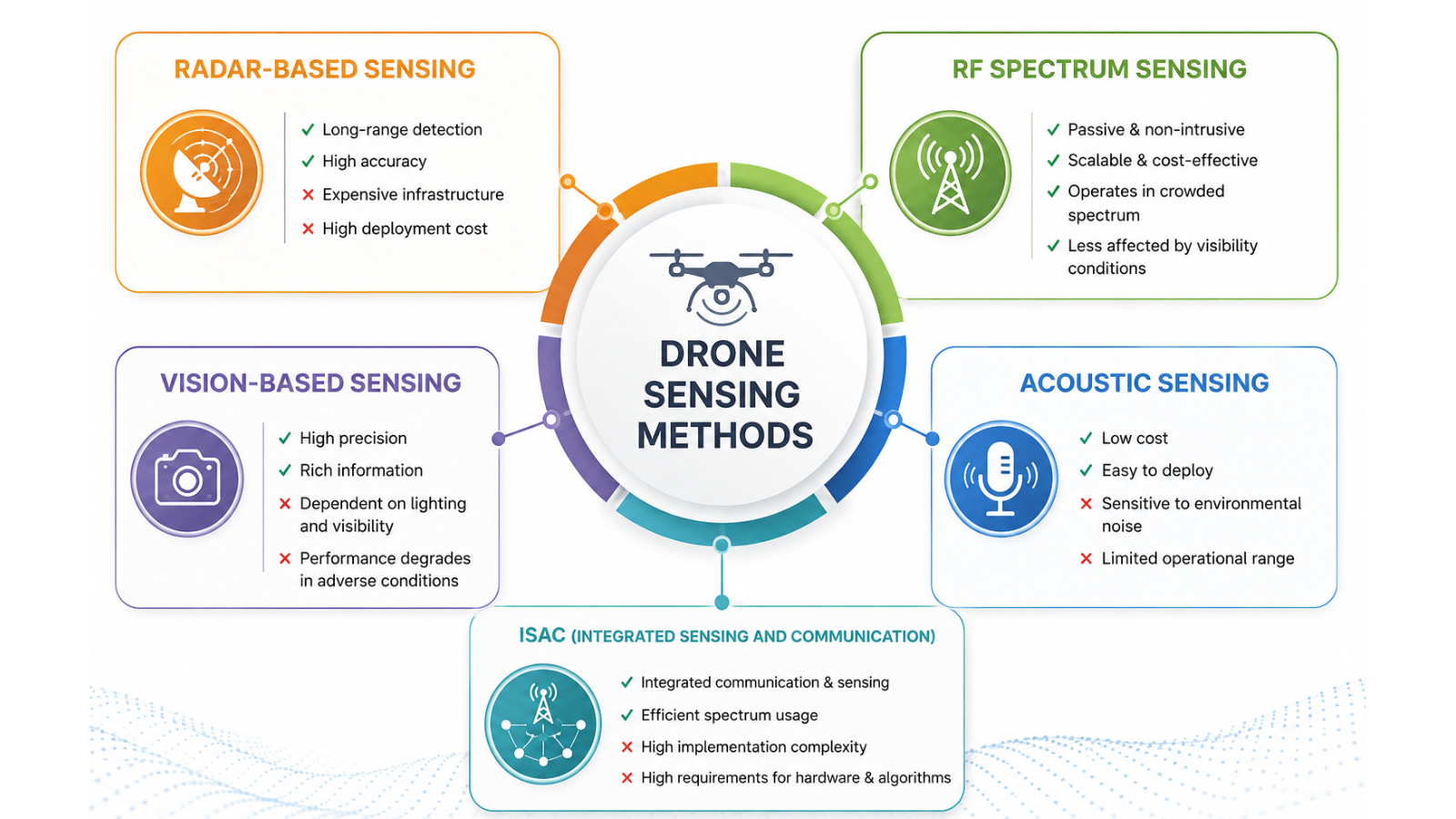
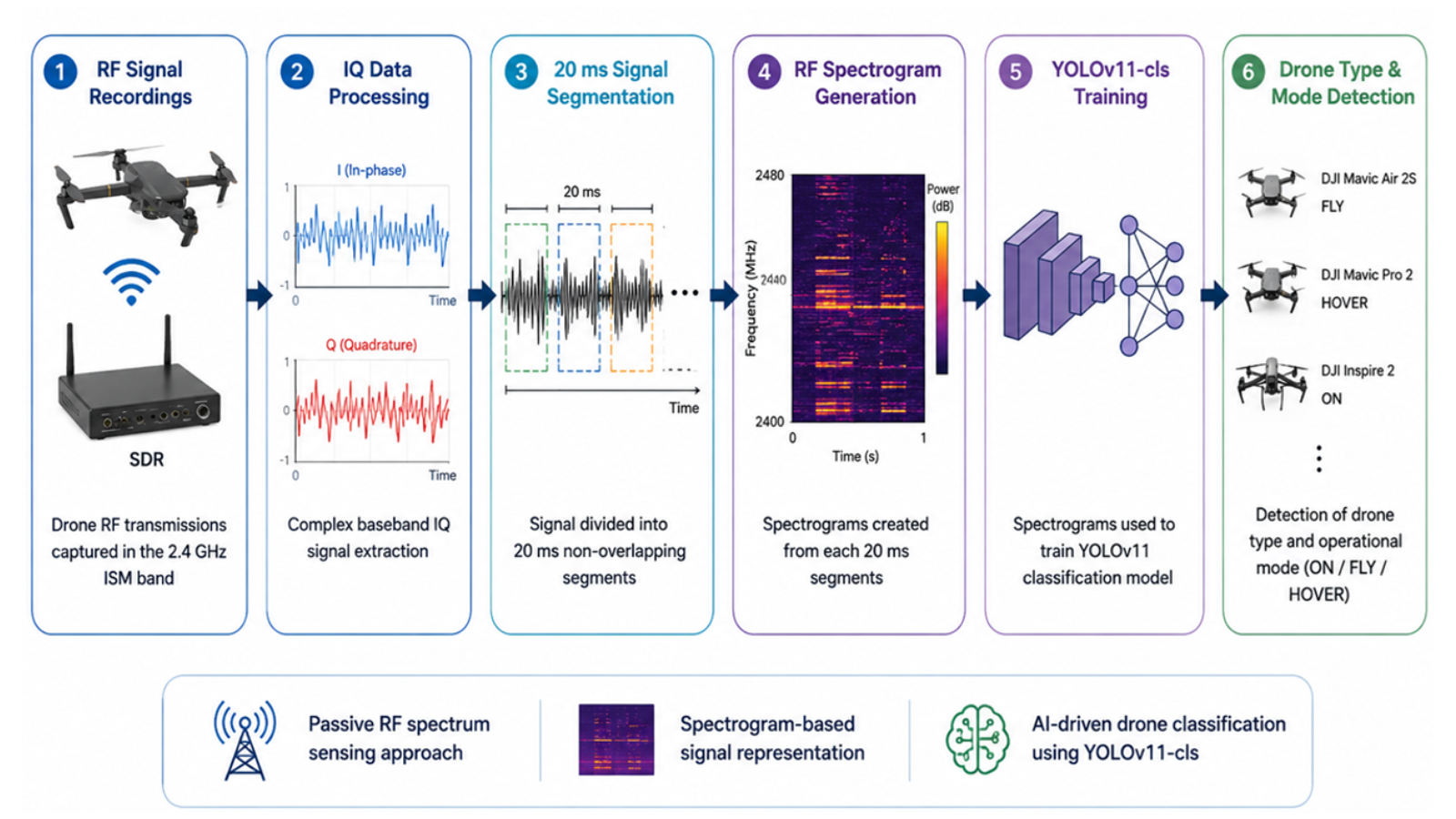
- Alexandrin Guțu, Alexandru Lavric, Valentin Popa, Mutescu Partemie-Marian, Cristian Patachia – Sultanoiu, and Razvan Mihai. “Advanced Radio Spectrum Sensing for UAVs Detection Using Artificial Intelligence Techniques.” in IEEE Access, vol. 14, pp. 126300-126310, 2026.
- Partemie-Marian Mutescu, Alexandru Lavric, Adrian-Ioan Petrariu, Razvan Marius Mihai, Cristian Patachia-Sultanoiu. “NORSS: Noise Oriented Radio Spectrum Sensing.” 2026 IEEE International Symposium on Antennas and Propagation and USNC-URSI Radio Science Meeting (IEEE AP-S/URSI 2026), Detroit, Michigan, USA, 2026.
- Alexandrin Guțu, Alexandru Lavric, Mutescu Partemie-Marian, Cristian Patachia – Sultanoiu, and Razvan Mihai. “Radio Drone Sensing for Future B5G Networks.” Advanced Topics on Measurement and Simulation (ATOMS), Cluj-Napoca, Romania, 2026, pp. 1-4.
IoTSensing Project Results. Publications for 2025 year:
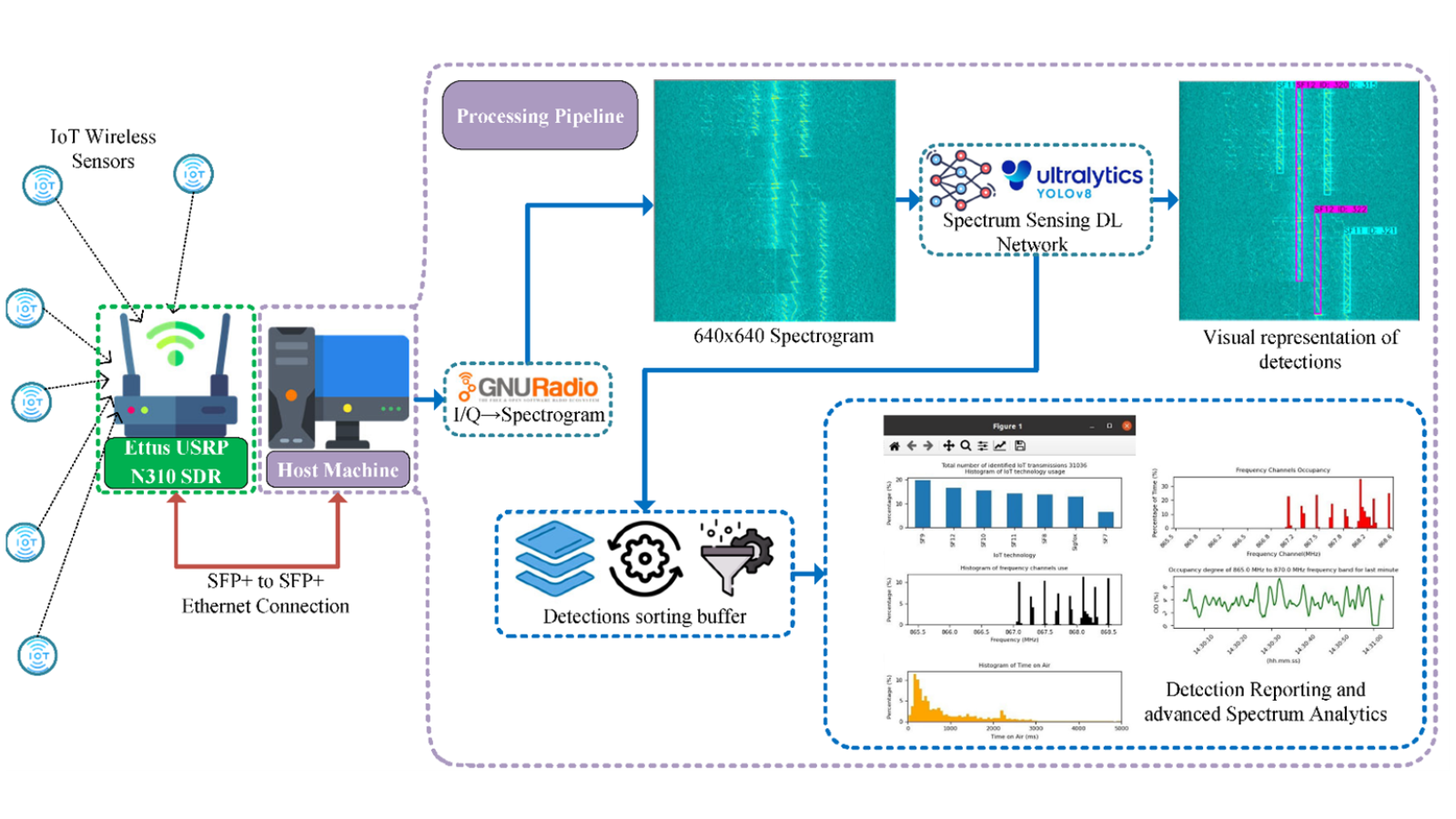
- Mutescu,Partemie-Marian, Alexandru Lavric, Adrian-Ioan Petrariu, Alin-Mihai Cailean, and Valentin Popa. “ Radio Spectrum Sensing Framework for Large-Scale, High-Density IoT Sensor Networks .” IEEE Access (2025).
- Mutescu, Partemie-Marian, Valentin Popa, and Alexandru Lavric. 2025. “ LoRa Communications Spectrum Sensing Based on Artificial Intelligence: IoT Sensing .” Sensors 25, no. 9: 2748.
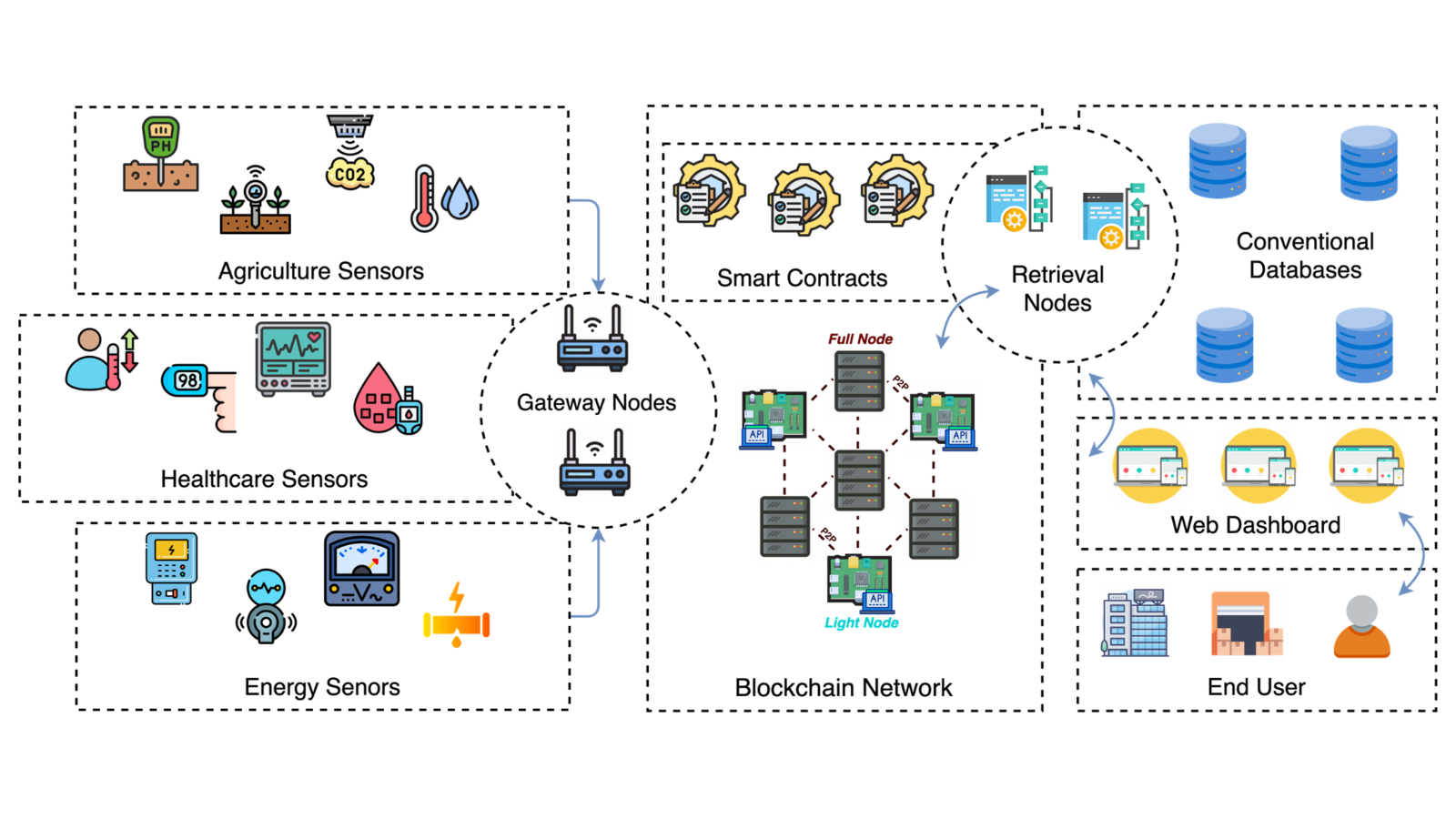
- Maftei, Alexandru A., Adrian I. Petrariu, Valentin Popa, and Alexandru Lavric. 2025. “ A Blockchain Framework for Scalable, High-Density IoT Networks of the Future .” Sensors 25, no. 9: 2886.
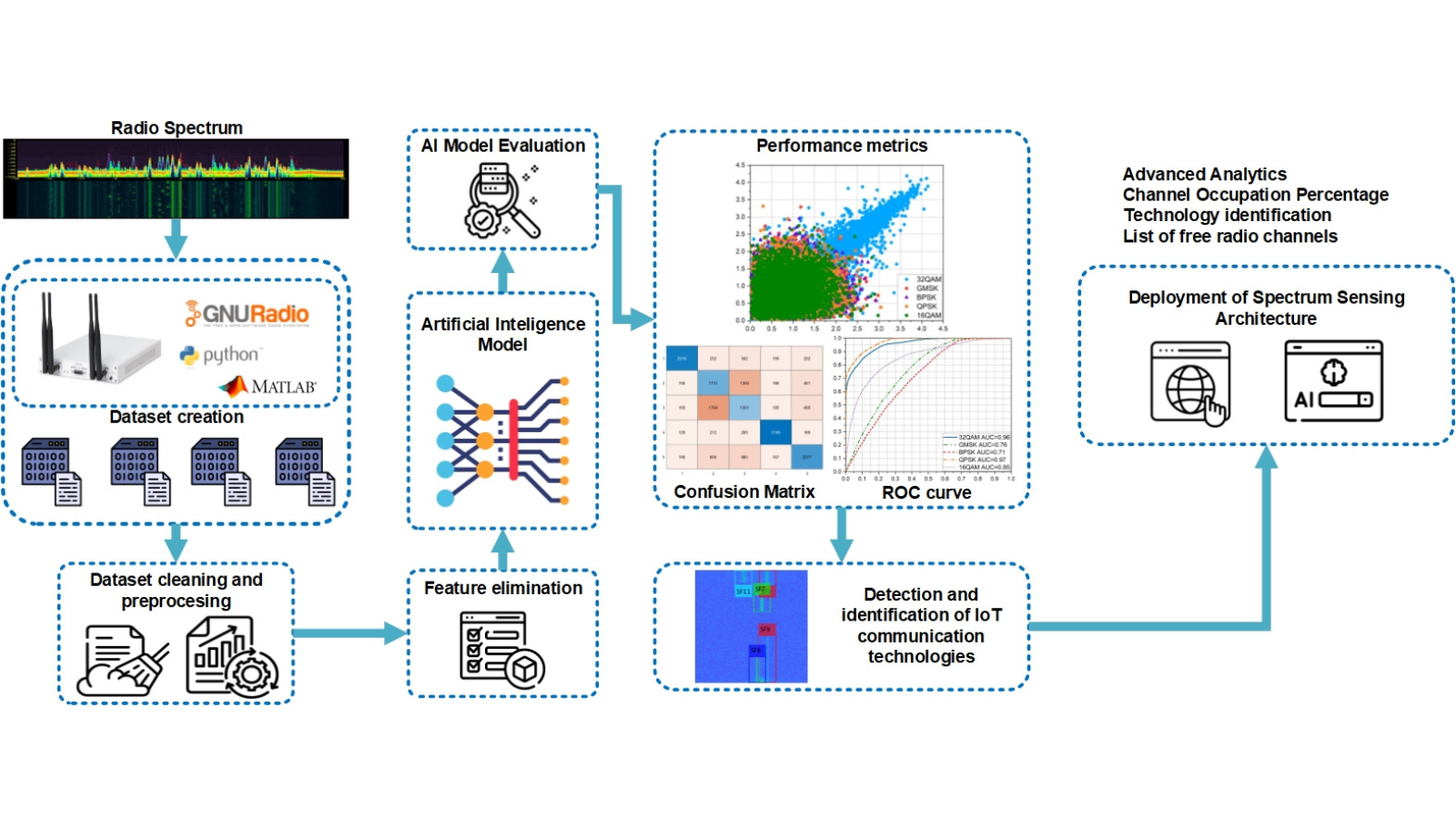
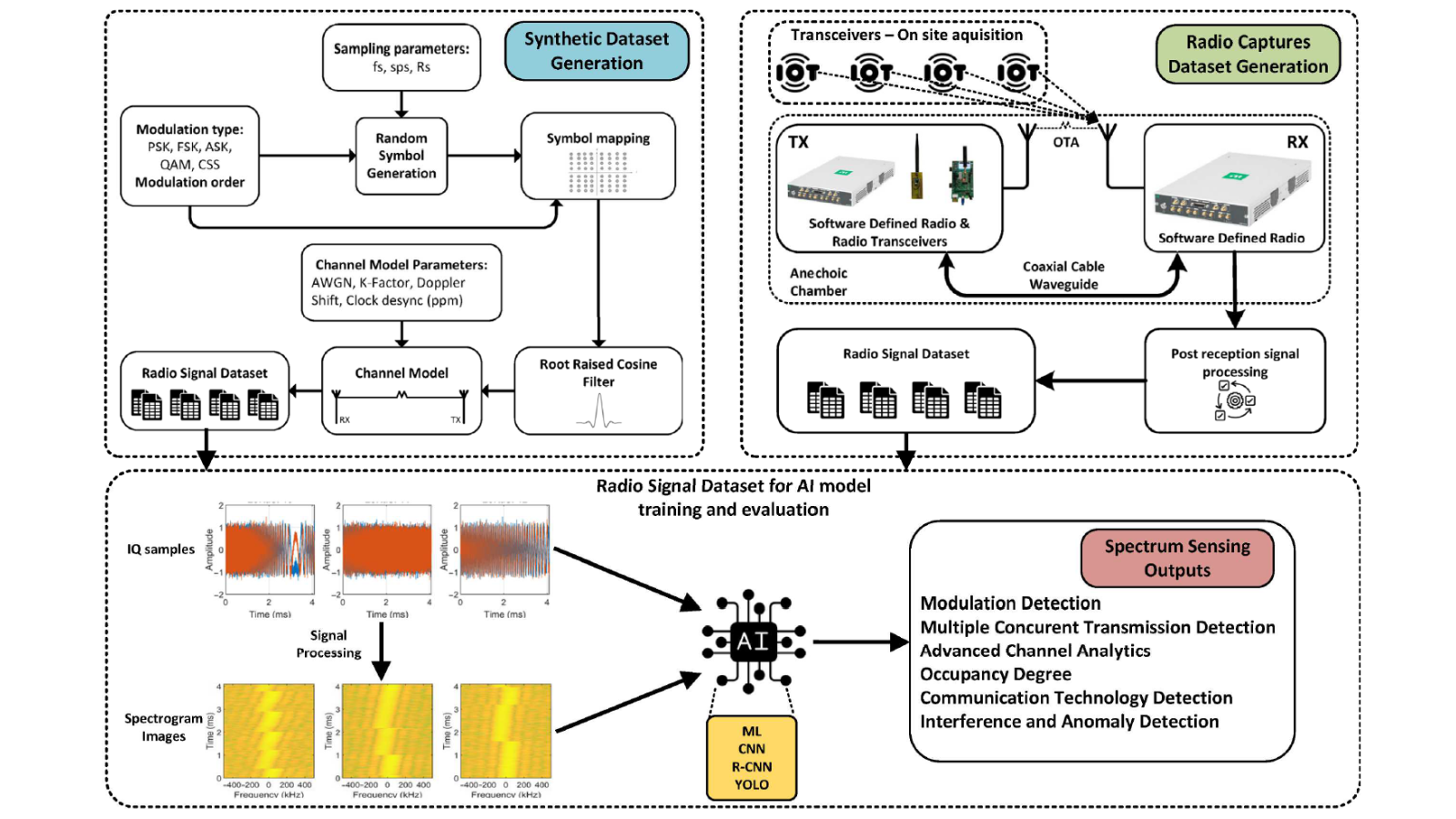
- Mutescu, Partemie-Marian, Valentin Popa, and Alexandru Lavric. “ Dataset Creation Strategies for Future AI-based Radio Spectrum Sensing Applications ,” 2025 International Conference on Control, Automation and Diagnosis (ICCAD), Barcelona, Spain, 2025, pp. 1–6.
- Mutescu, Partemie-Marian, Alexandru Lavric, Adrian-Ioan Petrariu, and Valentin Popa. “ AI-Powered Capabilities for IoT Spectrum Sensing Applications ,” 2025 International Conference on Artificial Intelligence, Computer, Data Sciences and Applications (ACDSA), Antalya, Turkiye, 2025, pp. 1–6.
- Mutescu, Partemie-Marian, Alexandru Lavric, Adrian-Ioan Petrariu, and Valentin Popa. “ Artificial Intelligence Noise Estimation for Adaptive, Energy Detection in Dynamic Radio Environments ,” IEEE PES Innovative Smart Grid Technologies (ISGT) Middle East, 23-26th November 2025, Dubai, UAE.
- Alexandru Lavric, Guțu Alexandrin, Adrian-Ioan Petrariu, Partemie-Marian Mutescu. “ Iot-Based Adaptive Street Lighting: Scalable Solutions for High-Density Large-Scale Smart City Networks ,” IEEE PES Innovative Smart Grid Technologies (ISGT) Middle East, 23-26th November 2025, Dubai, UAE.
- Alexandru Lavric, Partemie-Marian Mutescu, Adrian-Ioan Petrariu, Eugen Coca. “ Enhancing Emergency Communication with SDR Based PMR Capture and Speech Recognition ,” IEEE 31st International Symposium for Design and Technology in Electronic Packaging (SIITME), Brasov, 22-25 October, 2025. Best Poster Award
- Adrian-Ioan Petrariu, Alexandru Lavric, Alexandru-Adrian Maftei,Valentin Popa. “ Comparative Analysis of ASK, FSK, GFSK, and MSK Modulations in LPWAN Scenarios ,” 31st International Symposium for Design and Technology in Electronic Packaging (SIITME), Brasov, 22-25 October, 2025.
Participation in research funding competitions
- LUMEN-6G: Lightweight Ultra-efficient Multiband End-to-end Networks for 6G, Call: HORIZON-JU-SNS-2025-01, Topic: “ HORIZON-JU-SNS-2025-01-STREAM-B-03-02, .” Type of Action: HORIZON-JU-RIA (HORIZON JU Research and Innovation Actions), Proposal number: 101292960. (Director Partener USV: Alexandru Lavric) (2025).
Technical documentation (available on the EVOC reporting platform)
2. Technical Report: AI dataset (technical report).
IoTSensing Project Results. Radio Spectrum Sensing Free Datasets:
SpectrumHive LoRa Dataset
This dataset comprises 156,000 radio signal frames using the CSS LoRa modulation with spreading factors from 7 to 12, with 26,000 signal frames for each LoRa SF.
The LoRa signals are synthetically generated using Bassel Al Homssi library under Matlab environment [1]. Each signal frame consists of 4,096 complex samples, captured at a sampling rate of 1 Msps, with a signal-to-noise ratio (SNR) ranging from -20 dB to 30 dB with an increment of 2 dB. The dataset incorporates Rician fading and clock offsets between -5 and +5 ppm, with each frame having normalized power. The dataset is stored in MAT files, with each file containing two variables:
-IQ samples: Stored as a complex double array.
-Label: Provided in categorical format.
This dataset was used to train and evaluate a CNN for LoRa SF detection, which obtained a live inference detection accuracy of 99.16% using SX1276 LoRa transceivers.

SpectrumHive_IoT_Dataset_IQstream Dataset
This dataset comprises 120,000 radio signal frames spanning 11 modulation classes and noise. The modulation classes included are: QPSK, DBPSK, GFSK, 16QAM, 64QAM, CSS LoRa SF7, CSS LoRa SF8, CSS LoRa SF9, CSS LoRa SF10, CSS LoRa SF11, and CSS LoRa SF12.
Each signal frame consists of 4,096 complex samples, captured at a sampling rate of 1 Msps, with a signal-to-noise ratio (SNR) ranging from -5 dB to 30 dB. The dataset incorporates Rician fading and clock offsets between -5 and +5 ppm, with each frame having normalized power.
The dataset is stored in MAT files, with each file containing two variables:
-IQ samples: Stored as a complex double array.
-Label: Provided in categorical format.
This dataset is well-suited for research and development in wireless signal processing, modulation classification, and deep learning applications.
IoTSensing Project Results. Conference Participations and Publications for 2025 year
- 9th edition in the series of the International Conference on Control, Automation and Diagnosis, Barcelona Spain, Paper title: Dataset Creation Strategies for Future AI-based Radio Spectrum Sensing Applications
- International Conference on Artificial Intelligence, Computer, Data Sciences and Applications (ACDSA), Antalya, Turkey, Paper title: AI-Powered Capabilities for IoT Spectrum Sensing Applications
Verifiable Results and Achieved Indicators
| Verifiable Results (Stage 1 – Year 2025) | Achieved Indicators (Stage 1 – Year 2025) |
|---|---|
| Two articles published in Q1–Q2 journals. | Three articles published in Q2 journals, with a cumulative impact factor of 10.6. |
| Two presentations at international conferences. | Six presentations at international conferences. |
| Two papers published in the proceedings of two international conferences. | Six papers published in the proceedings of two international conferences. |
| Report: Development and integration of the dataset to be used for training AI algorithms for spectrum detection. | Report delivered: Development and integration of the dataset to be used for training AI algorithms for spectrum detection. |
| Technical report: AI dataset. | Technical report delivered: AI dataset. |
| One public information event to present the project results. |
|
Events European Researchers’ Night
Scope of the IoTSensing research project
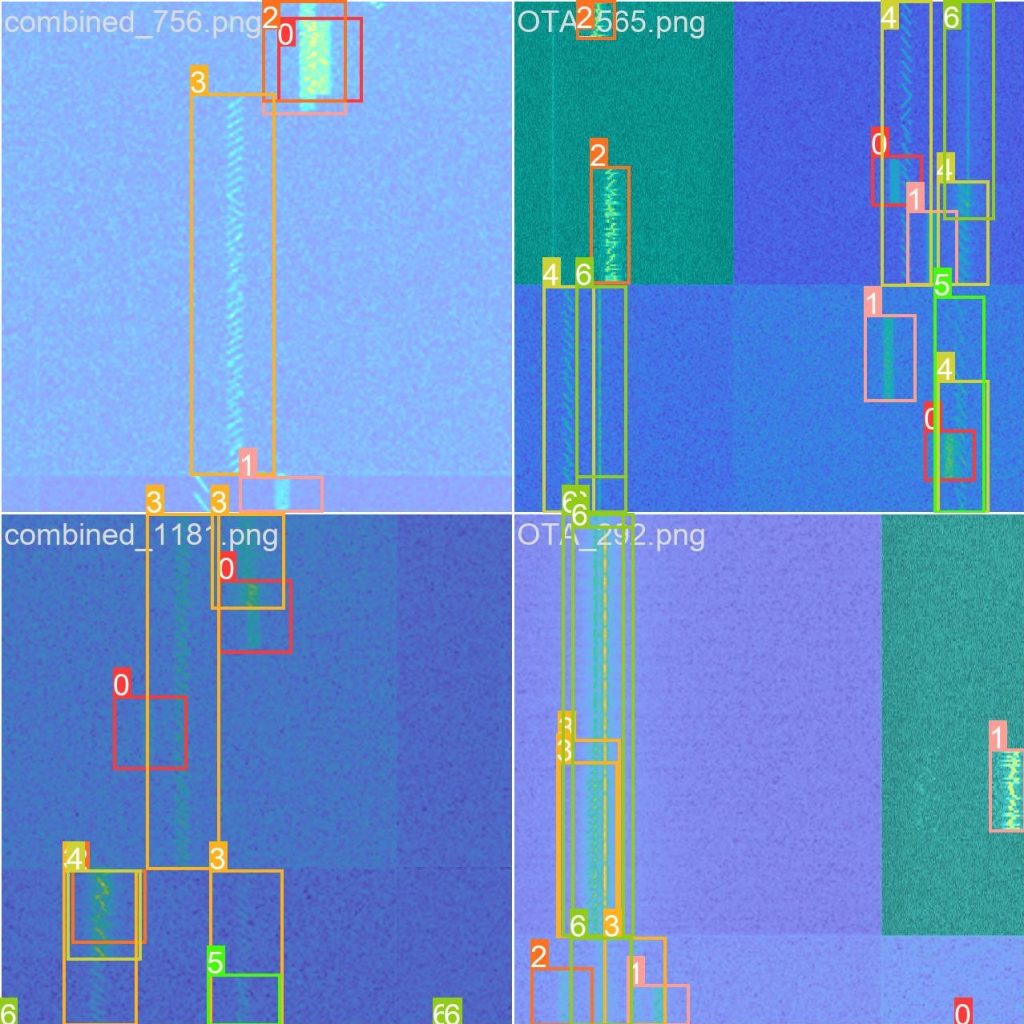
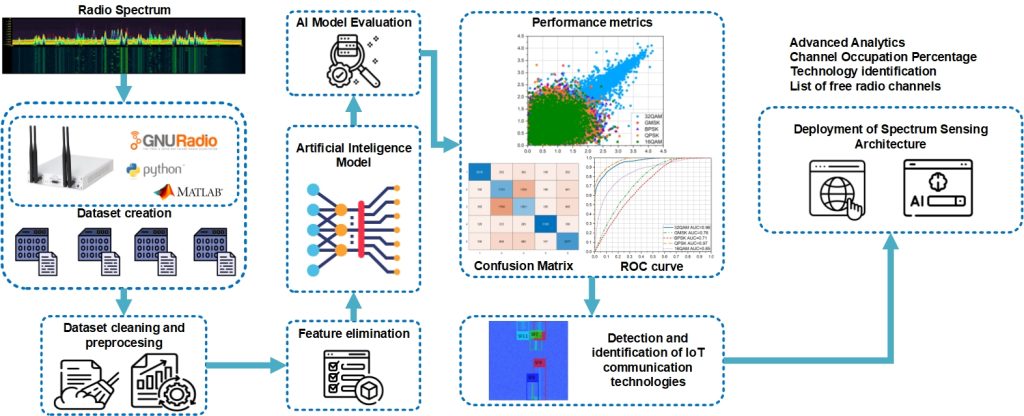
The IoTSensing project entails the design, implementation and testing of spectrum sensing AI algorithms that are able to perform radio spectrum sensing with the main purpose to increase the performance level of large-scale high-density IoT networks. The algorithms will be validated in real operating conditions and will integrate advanced machine learning and deep learning architectures to achieve the highest level of performance. The novel platform will also integrate an interface to visualize and analyze IoT radio spectrum usage, detect interference, and generate detailed reports on radio spectrum occupancy and even radio channel allocation patterns.
”Efficient spectrum sensing is the backbone of modern wireless communication. In a world where connectivity fuels innovation, the ability to intelligently manage and optimize radio frequencies is key to unlocking the full potential of emerging technologies like IoT, 5G, and beyond.”Spectrum Sensing
Radio Spectrum
Spectrum Sensing Intelligence
IoT Devices
Spectrum Sensing Awearness
Objectives
Main objective: Design, implementation and testing of spectrum sensing AI algorithms that are able to perform radio spectrum sensing with the main purpose to increase the performance level of large-scale high-density IoT networks.
- O1: The first objective is to create, develop and record the datasets that will be used for the AI spectrum sensing algorithm training, validation, and testing.
- O2: The second objective is the training and validation of the developed AI algorithms that will be able to classify different IoT technologies (e.g. LoRa, SigFox). This objective also entails the entails the deep learning algorithm design where different configuration and neural networks will be analyzed and evaluated.
- O3: The third objective is to experimentally evaluate, test and optimize the developed AI spectrum sensing algorithms prototypes. These tests will be firstly performed in various laboratory conditions and also in real time operating conditions.
- O4: The fourth objective is to maintain and further develop our young research team, by financially supporting two highly performant Postdocs young researchers and also a PhD student that will add original and high-impact research results to his thesis.
- O5: The fifth objective is to increase the visibility of our research group included in this research proposal and to contribute to the international visibility of University of Suceava and of the Romanian research by publishing high quality and novel research results meanwhile, contributing to the future IoT networks.
Our Mission
Our mission is related to finding solutions to improve IoT network’s scalability by using advanced spectrum sensing algorithms that can enable channel allocation techniques and optimized radio channel allocation and utilization in large scale high density IoT architectures. The design of different spectrum sensing algorithms is currently an open issue, and further improvements are needed.
Artificial Intelligence Spectrum Sensing Algorithms for large scale high-density Internet of Things (IoT) Networks
IoTSensing